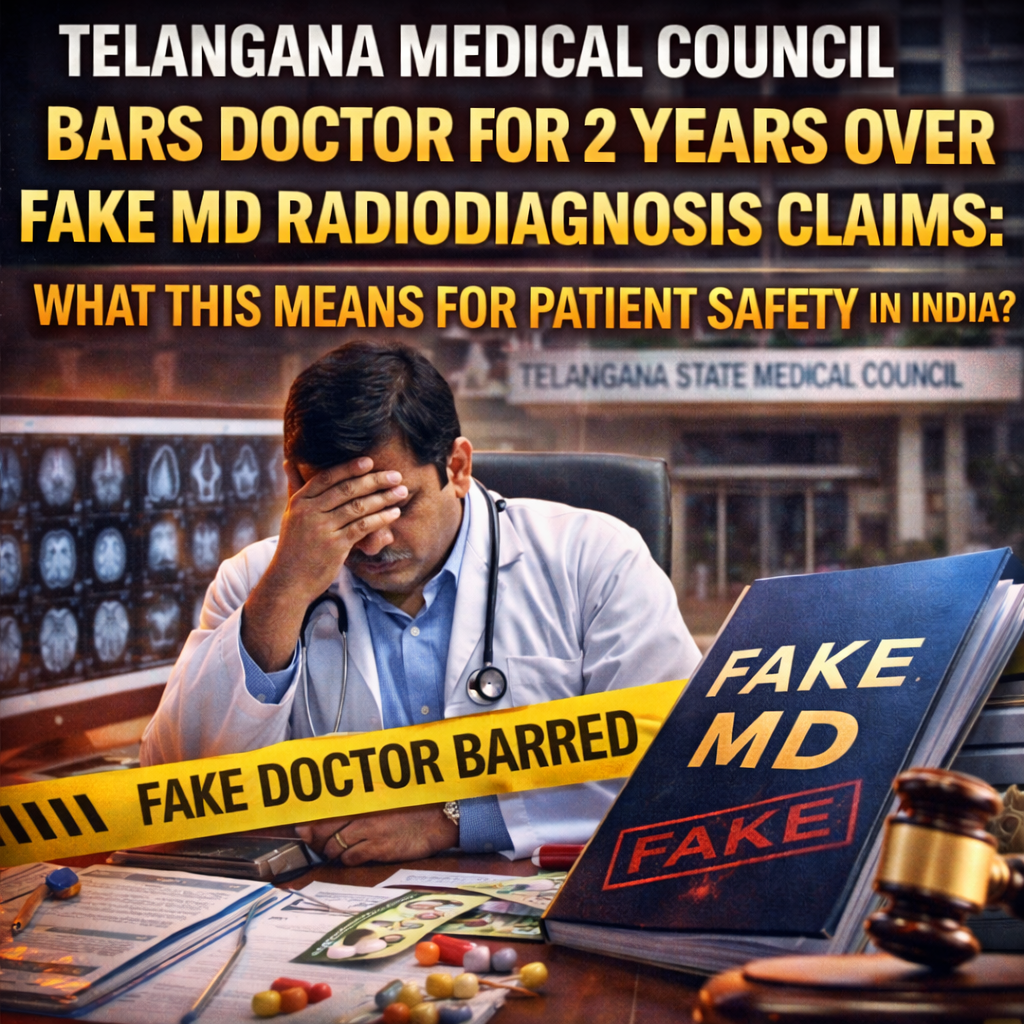
This case, which came to light through a suo motu inquiry by the council, highlights a serious issue in India’s healthcare system: the risk of unqualified or improperly registered practitioners handling critical diagnostic work. Published on April 10, 2026 this story serves as a timely reminder for every patient about why verifying a doctor’s credentials is more important than ever.
What Exactly Happened in the Suryapet Case?
The investigation focused on practices at Apple Scan Centre in Suryapet. The primary doctor involved, Dr. Kiran Kumar Soma (registered only as a sonologist), had been:
- Displaying “MD (Radiodiagnosis)” on name boards, signage, and medical reports
- Presenting himself as a fully qualified Consultant Radiologist
- Operating with an expired medical registration since March 26, 2022
- Submitting fabricated or unrecognised documents during council inspections
Another doctor at the centre, Dr. Ali, was also found practising without valid registration in Telangana and using false documentation. After a thorough review by the Ethics Committee and final approval by the TGMC’s General Body, the council imposed strict penalties. Dr. Soma’s name has been removed from the Telangana Medical Register for two full years. He must surrender his registration certificates within ten days, or the removal could become permanent. Dr. Ali received a formal censure (official reprimand).
The action was taken under the Telangana Medical Practitioners Registration Act, 1968 and the Indian Medical Council’s regulations on professional conduct.
Why This Case Is a Wake Up Call for Patients
Radiology and diagnostic imaging are the backbone of modern medicine. CT scans, MRIs, ultrasounds and X-rays help doctors detect everything from fractures and tumours to pregnancy complications and internal bleeding. A single misread image can lead to wrong treatment, delayed care or even life threatening mistakes.
When someone without proper postgraduate training interprets these scans, risks go up sharply:
- Missed or incorrect diagnoses
- Unnecessary radiation exposure
- Wrong treatment plans that waste time and money
- Erosion of trust in the entire healthcare system
This isn’t an isolated incident. Medical councils across India regularly act against fake degrees, lapsed registrations and quackery.National Medical Commission (NMC) and state bodies have been stepping up efforts to maintain standards, but patients still need to stay alert.
How to Verify Your Doctor’s Credentials – A Simple Step by Step Guide
Protecting your health starts with a few quick checks. Here’s exactly what you can do before any scan or consultation:
- Check the State Medical Council Register
Visit your state’s official medical council website (for Telangana: onlinetsmc.in) and search the doctor by name or registration number. - Use the National Medical Commission Portal
Go to nmc.org.in and check the Indian Medical Register. It shows active registration and recognised qualifications. - Confirm the Right Qualifications
For radiology work, look specifically for MD/DNB in Radiodiagnosis (or equivalent NMC-approved postgraduate degree). A basic MBBS or sonologist registration is not enough for full diagnostic reporting. - Ask the Diagnostic Centre Directly
Politely request to see the radiologist’s credentials. Reputable centres display them proudly. - Watch for Red Flags
- Vague or missing qualification details on reports and boards
- Extremely low prices that seem too good to be true
- Refusal to share information about the reporting doctor
- Expired registration dates
Bonus tip: For ultrasound centres, also check if the facility is registered under the PCPNDT Act, which regulates prenatal diagnostic techniques.
The Bigger Picture: Strengthening Trust in Indian Healthcare
Cases like this show that regulatory bodies are actively working to clean up the system. While most doctors in India are dedicated professionals who follow ethics, a few bad actors can damage the reputation of the entire field.
The good news? Greater awareness among patients, combined with stricter enforcement by the NMC and state councils, is pushing the industry toward higher standards. More transparency, better digital verification tools, and public education will help reduce such incidents in the future.
Final Thoughts
Your health deserves qualified hands. The Telangana Medical Council’s firm action in this Suryapet case sends a clear message: professional misconduct will not be tolerated. As patients, we have the power and responsibility to ask questions and verify credentials. Next time you walk into a diagnostic centre or clinic, take an extra minute to confirm the doctor’s qualifications. It could make all the difference.
Have you ever double checked your radiologist’s credentials before a scan? Or faced a situation where you questioned the doctor’s qualifications? Share your experiences in the comments below. Your story could help other readers stay safe.
Disclaimer: This article is for informational and educational purposes only. It is not a substitute for professional medical advice. Always consult a qualified registered doctor for health concerns.