Rajasthan Private Hospitals Shutdown 2026: What the RGHS Boycott Means for Patients
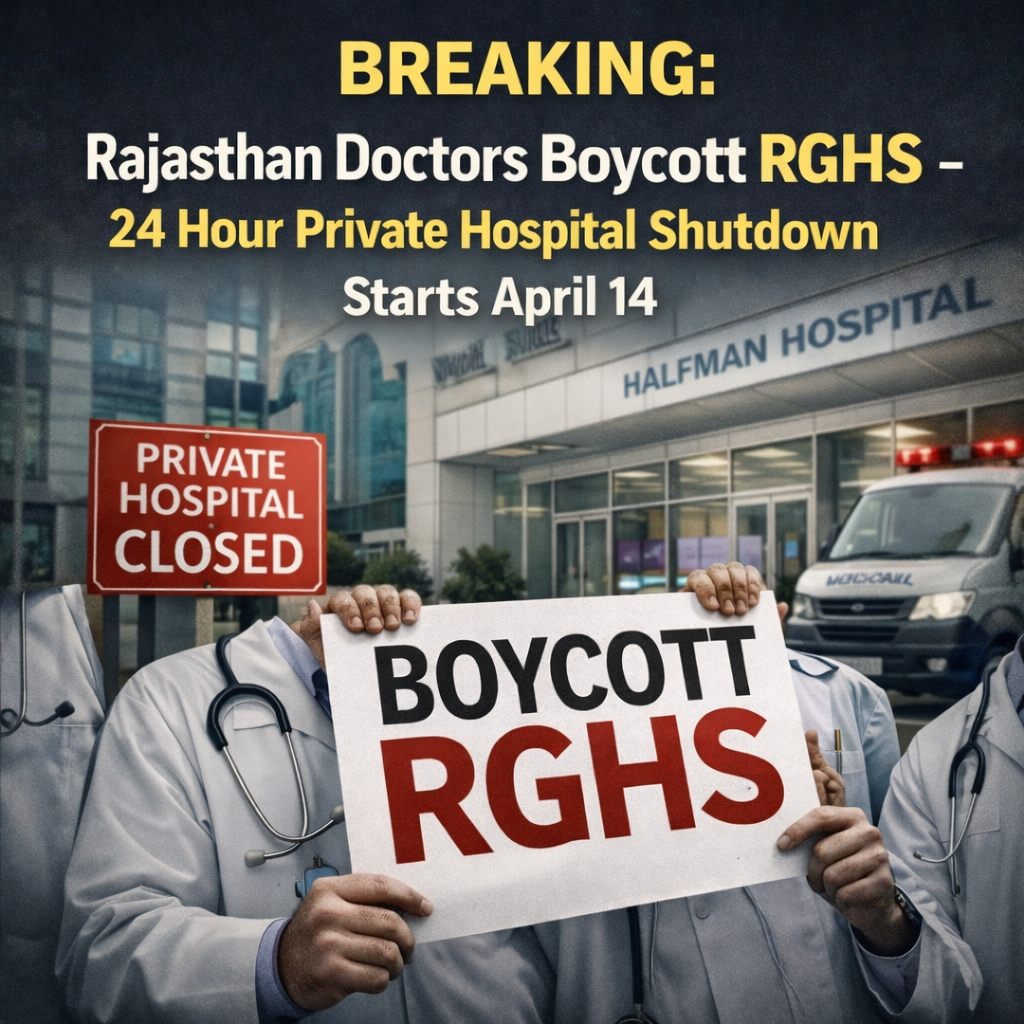
In a major development shaking Rajasthan’s healthcare system, private hospitals and doctors’ associations have announced an immediate 24 hour shutdown. Starting 8 AM on April 14 and ending 8 AM on April 15, 2026, boycott affects services under the Rajasthan Government Health Scheme (RGHS). The Indian Medical Association (IMA) Rajasthan and major hospital bodies are backing the protest following the arrest of a Jaipur doctor.
This post explains the situation in simple terms, its background, how it affects patients, and what you should do if you need medical care right now. Whether you are an RGHS card holder, a patient, or simply concerned about healthcare access in Rajasthan, read on for clear, balanced information.
What is the Rajasthan Government Health Scheme (RGHS)?
The Rajasthan Government Health Scheme (RGHS) is a key public health program run by the state government. It offers cashless medical treatment to state government employees, pensioners, ministers, MLAs and their families.
Important features of RGHS include:
- Cashless OPD and IPD treatment at empanelled private and government hospitals.
- Coverage for surgeries, diagnostics, medicines, and follow-up care.
- Billing based on Central Government Health Scheme (CGHS) package rates.
- A digital portal for smooth claim processing through Transaction IDs (TIDs).
Millions of families rely on RGHS to avoid huge medical bills. Private hospitals form a big part of the empanelled network, making the scheme successful. However, the partnership between the government and private providers has faced challenges like delayed payments and complex paperwork in the past.
The Trigger: Arrest of Dr. Sondev Bansal
The protest started after the arrest of Dr. Sondev Bansal, director of Nivik Hospital in Mansarovar, Jaipur, on April 13, 2026. According to reports, case began in September 2025 when a patient treated at the hospital passed away. The patient’s family filed a complaint alleging irregularities. While a medical board reportedly found no evidence of medical negligence, police acted on alleged forgery and fabrication of documents submitted for RGHS claims (such as admission records and consent forms). Doctors view the arrest as disproportionate, especially since the medical board cleared the negligence angle. They argue the issues were procedural rather than criminal fraud.
Why Are Private Hospitals Boycotting RGHS Services?
At a high level meeting chaired by IMA Rajasthan President Dr. Mahesh Chandra Sharma, private hospital representatives unanimously decided to:
- Stop issuing new Transaction IDs (TIDs) under RGHS.
- Boycott all RGHS related services.
- Observe a complete 24 hour closure of OPD, IPD and emergency services in private hospitals.
The boycott will continue until Dr. Bansal is released and the disputed issues are resolved.
Supporting organisations include:
- Rajasthan Alliance of Hospital Associations
- Private Hospitals and Nursing Homes Association (PHNHA)
- IMA Rajasthan and other medical bodies
Leaders like IMA Rajasthan Zonal Secretary Dr. Anurag Sharma have spoken of “deep anger” among doctors across the state. They say the arrest was made without due process and has hurt the dignity and morale of the medical fraternity.
How Will the Shutdown Affect Patients?
The 24 hour shutdown will directly impact thousands of patients who depend on private hospitals for faster or specialised care.
Services likely affected:
- New OPD consultations
- Elective surgeries and procedures
- Routine admissions
- Fresh RGHS claims
Services that should continue:
- Treatment for patients already admitted before the shutdown
- Critical care in genuine emergencies (though new cases may face delays)
Government hospitals remain open, but they are often overcrowded. People in smaller cities and towns who usually visit nearby private empanelled hospitals may feel the biggest impact.
Both Sides of the Story: Accountability vs Medical Fraternity Concerns
Doctors’ perspective: The medical community believes minor documentation errors in a complex scheme should not result in immediate arrests, especially when no negligence was proven. They worry such actions discourage private hospitals from joining government schemes and create fear among doctors.
Government and patient perspective:
Ensuring proper use of public money in schemes like RGHS is important. Investigations into alleged document forgery help maintain transparency and prevent misuse of taxpayer funds. This situation shows the need for better dialogue, clearer guidelines and fair grievance mechanisms so that both sides can work together smoothly.
Broader Issues Plaguing RGHS and Healthcare in India
RGHS has faced earlier protests over delayed payments running into hundreds of crores and strict compliance rules. Similar tensions exist in other states with government health insurance schemes (like Ayushman Bharat).
Private hospitals say they support the scheme’s goal but need timely payments and simpler processes to stay sustainable. The government, meanwhile focuses on preventing leakages and improving oversight. These recurring issues highlight the challenges of public private partnerships in Indian healthcare. A collaborative approach involving doctors, hospital owners, regulators and the government is essential for long term success.
Practical Advice for Patients in Rajasthan Right Now
If you or a loved one needs medical help during April 14–15, 2026:
- Call your hospital first – Confirm whether your appointment or procedure is affected.
- Shift to government facilities – District hospitals and medical colleges are functioning normally.
- Handle emergencies wisely – Use ambulance services and head to the nearest government emergency department.
- Keep documents ready – Carry your RGHS card, Aadhaar and medical records.
- Monitor updates – Follow official RGHS portals or trusted news sources for any extension of the shutdown.
Already admitted patients should not face disruption in ongoing treatment.
Conclusion and Way Forward
The 24 hour shutdown by Rajasthan’s private hospitals is a strong signal of the frustration felt by the medical community over the handling of RGHS cases. While it may cause short term inconvenience to patients, the protest aims to address deeper systemic problems in the scheme.
Both the government and doctors share the common goal of quality, affordable healthcare. A quick and fair resolution through talks will benefit everyone especially the patients who rely on RGHS every day.We hope the matter is resolved peacefully so that normal services resume without further delay. In the meantime, stay safe, plan ahead and prioritise your health.
FAQs
Q1. Will emergency services be available?
A: Already admitted patients will continue receiving care. New emergencies may need to go to government hospitals.
Q2. Is the shutdown only in Jaipur?
A: No, it is statewide and affects private hospitals across Rajasthan.
Q3. When will RGHS services resume?
A: It depends on negotiations. The boycott is scheduled to end at 8 AM on April 15 unless extended.
This article is for informational purposes only and is based on publicly reported facts as of April 14, 2026. For medical advice, consult a qualified doctor.