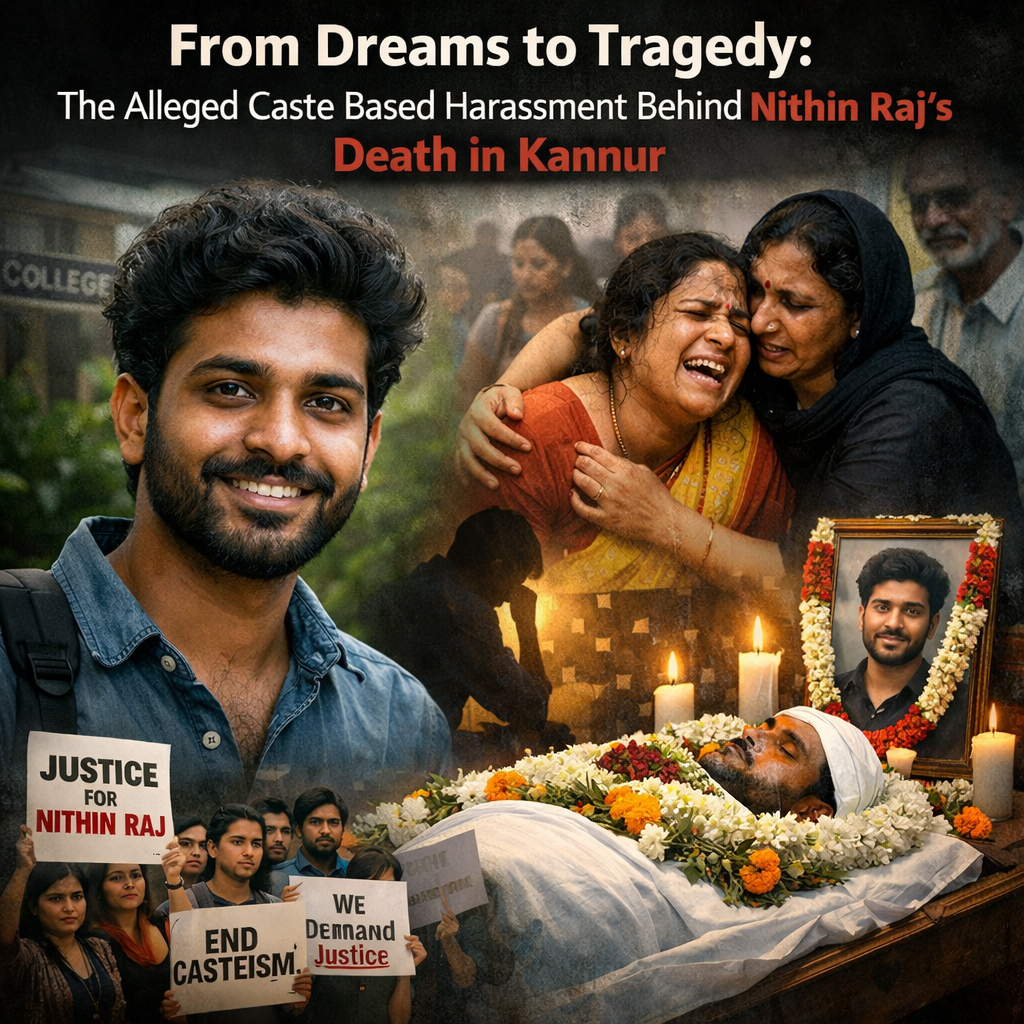
On April 10, 2026 sudden death of 22 year old R.L. Nithin Raj, a first year Bachelor of Dental Surgery (BDS) student at Anjarakandy Dental College in Kannur, Kerala, sent shockwaves across the state and beyond. What began as a reported fall from a building on campus has quickly evolved into a high profile case involving serious allegations of caste based humiliation, colorism and emotional abuse by faculty members.
Nithin’s family has come forward with painful claims that he was repeatedly targeted for his Dalit background, dark complexion, and his parent’s modest background as daily wage labourers. As this story continues to unfold, it forces us to confront an uncomfortable truth: even in a state like Kerala known for high literacy and progressive values deep rooted prejudices can still cast long shadows inside classrooms.
What We Know About the Incident
Nithin Raj hailed from Thiruvananthapuram and had recently joined the dental college with dreams of becoming a doctor. According to police and family statements, he fell from a building on the college campus on April 10 and was rushed to a nearby hospital, where he was declared dead.
His family refuses to accept the death as a simple accident or suicide without deeper scrutiny. They allege that Nithin had been enduring systematic verbal and emotional harassment from at least two faculty members for months. An audio clip that has surfaced (believed to have been recorded by Nithin himself) reportedly captures him describing the insults and threats he faced. In the clip, he is said to have mentioned being called derogatory names linked to his caste and appearance and being threatened with academic failure.
The two faculty members named in the complaints are Dr. MK Ram (Head of Department, Dental Anatomy) and Dr. KT Sangeetha Nambiar (Associate Professor). Both have been suspended by the college authorities pending inquiry. Kerala Police have registered cases against them under relevant sections of the Indian Penal Code (including abetment to suicide) and the Scheduled Castes and Scheduled Tribes (Prevention of Atrocities) Act 1989. An SIT (Special Investigation Team) has also been formed to ensure a thorough probe.
The Human Cost of Discrimination
What makes this case especially heartbreaking is the image of Nithin that has gone viral a young man with a warm smile, standing by the sea, full of life and potential. His family describes him as a bright, hardworking student who was proud to have cleared the entrance exams and entered professional education despite coming from a humble background.
His sister and parents have spoken publicly about how the alleged humiliation went beyond words. They claim Nithin was mocked in front of classmates, singled out for his skin colour, and made to feel inferior because of his caste and family’s economic status. For a young student far from home, such constant targeting can be devastating.
This is not just an individual tragedy. It highlights how caste and color bias can quietly persist even in modern, well regarded educational institutions. Students from marginalized communities often enter colleges carrying the extra burden of proving their worth not just academically but socially in environments that should be spaces of learning and growth.
Why This Matters in 2026
India has made remarkable progress in expanding access to higher education. Reservations, scholarships and outreach programs have helped thousands of first generation learners like Nithin enter professional courses. Yet incidents like this remind us that policy level inclusion is only half the battle. The real challenge lies in changing hearts and minds inside lecture halls, hostels and faculty rooms.
Colorism preference for lighter skin remains a widespread but rarely discussed issue across India, cutting across caste lines but often intersecting with it. When combined with caste based slurs or exclusion, it creates a toxic environment that no student should ever have to endure. Kerala, with its high Human Development Index and strong emphasis on education has long been held up as a model for the rest of the country. The fact that this alleged discrimination occurred here makes the story even more significant. It shows that no region is immune and that vigilance is required everywhere.
What Needs to Change
The ongoing investigation must be swift, transparent and impartial. The college has already taken the step of suspending the accused faculty members and initiating an internal inquiry these are positive first moves. But lasting change requires more:
- Mandatory sensitivity training for faculty and staff on caste, gender, and color sensitivities.
- Robust anti discrimination cells in every higher education institution with clear reporting mechanisms and zero tolerance policies.
- Counselling support for students from marginalized backgrounds to help them navigate challenges.
- Greater awareness among all students about the harmful impact of casual remarks that reinforce stereotypes.
Parents, teachers and society as a whole must also reflect. The pressure to “fit in” or the casual acceptance of derogatory language cannot be normalized in 2026.
A Call for Compassion and Accountability
Nithin Raj’s death has already triggered protests, statements from political leaders and widespread discussions on social media. Many are demanding justice not just for this one case but for every student who has silently suffered similar treatment.
As a society, we owe it to every young person chasing their dreams through education to ensure their classrooms are safe and respectful. No student should ever feel that their caste, skin colour or family background makes them less worthy of respect or success.
The investigation is still underway, and we must allow due process to take its course. But regardless of the final legal outcome, this tragedy has already opened an important national conversation. Let it not fade away once the headlines quiet down.
Let Nithin’s story become a catalyst for genuine change so that future students walk into colleges feeling valued for their talent and hard work not judged by the circumstances of their birth.
What do you think?
Have you or someone you know faced subtle discrimination in educational spaces? Share your thoughts respectfully in the comments below. Let’s keep the conversation going and push for a more inclusive tomorrow.
Note: This post is based on publicly reported information and family statements as of April 14, 2026. The case is under active investigation. We urge readers to avoid speculation and respect the ongoing legal process.