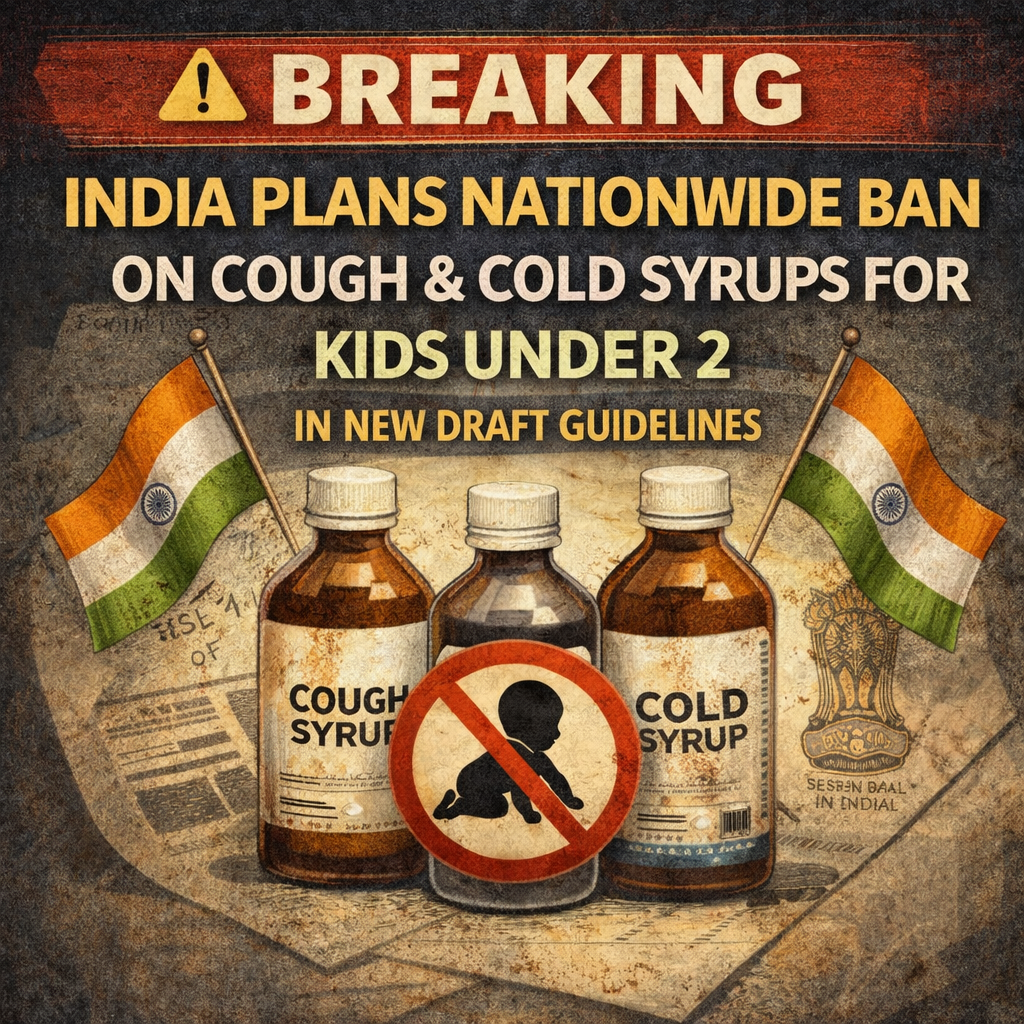
Union Health Ministry through the Indian Pharmacopoeia Commission (IPC) has released the draft National Formulary of India (NFI) 2026. One of its key proposals? A complete restriction on prescribing or dispensing cough and cold syrups to children under two years of age. The guidelines also strongly advise doctors to generally avoid these medications in children under five years unless there’s a clear medical need and close supervision.
This isn’t just another bureaucratic update it’s a significant step toward protecting our little ones from potential risks that many parents haven’t fully realized until now.
Why Is the Government Considering This Ban?
Coughs and colds are incredibly common in young children. Their immune systems are still developing and they pick up viruses at daycare, playgroups or even from family members. For decades, parents and doctors have relied on over the counter (OTC) cough and cold syrups for quick relief.
However, several concerns have piled up:
- Limited effectiveness in very young kids: Scientific evidence shows that most cough and cold medicines don’t actually work well for children under six. Many symptoms are self-limiting and resolve with time and supportive care.
- Safety risks: Young children metabolize medicines differently. Ingredients like dextromethorphan, pseudoephedrine, or antihistamines can cause drowsiness, breathing difficulties, or even more serious side effects in infants.
- Past contamination tragedies: India and the world witnessed heartbreaking incidents in 2025 where contaminated cough syrups (linked to toxic substances like diethylene glycol) led to child deaths. These events highlighted gaps in quality control and forced regulators to take a hard look at paediatric formulations.
The draft NFI 2026 aims to standardize safe drug use across the country by clearly listing indications, dosages, contraindications and warnings making it a must read reference for every doctor and pharmacist.
What Does This Mean for Indian Parents Right Now?
This is still a draft, so it’s open for public and expert feedback before it becomes final. But the direction is clear: era of routinely giving cough syrup to babies and toddlers may soon end.
If the proposal is finalized:
- Pharmacists will not be allowed to dispense cough/cold syrups to children under 2.
- Doctors will be guided to avoid recommending them unless absolutely necessary (and even then, with strict monitoring for older toddlers).
Parents will need to shift toward safer, non medicated ways of managing symptoms something paediatricians worldwide have been recommending for years.
Safe & Effective Home Remedies for Baby Cough and Cold (No Syrup Needed)
The good news? Most coughs and colds in children under 5 can be managed beautifully at home. Here are proven parent friendly alternatives that align perfectly with the new guidelines:
For Infants Under 1 Year:
- Saline nasal drops or spray: Clears stuffy noses instantly. Use 2-3 drops in each nostril before feeding or sleep.
- Bulb syringe or nasal aspirator: Gently suction out mucus after saline drops.
- Humidifier or steam: A cool mist humidifier in the baby’s room keeps air moist and eases breathing. Never use hot steam near babies.
- Elevate the head: Slightly raise the mattress (not the pillow) to help drainage.
- Frequent breastfeeding or formula: Keeps them hydrated and provides natural antibodies.
For Toddlers 1 Year and Above:
- Honey: Half a teaspoon of pure honey before bedtime can soothe cough better than many syrups (never give honey to babies under 1 year due to botulism risk).
- Warm fluids: Herbal teas (like tulsi or ginger, mildly prepared), warm water or soup.
- Rest and hydration: The body heals fastest when the child is well rested.
- Chest rub with menthol free balm: For kids over 3 months (check labels carefully).
These remedies are not only safer but often more effective for mild cases. Many parents report that once they stop relying on syrups, they notice their children recover just as quickly sometimes even faster.
When Should You Take Your Child to the Doctor?
Even with the best home care, some situations need professional help. Rush to your paediatrician if your child shows:
- Difficulty breathing or rapid breathing
- High fever lasting more than 2-3 days
- Cough that lasts longer than 2 weeks
- Wheezing or whistling sounds while breathing
- Refusal to feed or signs of dehydration
- Extreme lethargy or irritability
For children under 2, it’s always better to on the side of caution.
The Bigger Picture: A Win for Child Safety in India
This draft is part of a larger global movement. Countries like the USA, UK and Australia have already restricted or banned many cough and cold medicines for young children. India is now catching up, prioritizing evidence based medicine over old habits. By updating the National Formulary government is empowering doctors with clearer guidelines and protecting families from unnecessary risks. It also sends a strong message to pharmaceutical companies: paediatric medicines must meet the highest safety standards.
Frequently Asked Questions (FAQs)
Q: Can I still buy cough syrups for my 18 month old?
A: Once finalized, no pharmacists won’t dispense them for children under 2. Stock up on saline drops and a good humidifier instead!
Q: What about my 4 year old?
A: The draft strongly discourages use under 5, but a doctor may prescribe in specific cases with monitoring.
Q: Are there any safe syrup alternatives?
A: Focus on non drug remedies first. Your paediatrician may suggest paracetamol or ibuprofen only for fever/pain never for cough itself.
Q: Is this ban already in effect?
A: No, it’s still a draft but it’s wise to start adopting safer practices today.
Final Thoughts
As parents our top priority is keeping our children safe and healthy. This proposed ban on cough syrups for kids under 2 in the Draft NFI 2026 might feel like a big change, but it’s actually a protective shield. By moving away from medicines that offer little benefit and carry real risks, we’re embracing smarter, gentler ways to care for our little ones.
What do you think about this development? Have you already stopped using cough syrups for your young kids? Share your experiences in the comments below your story might help another parent!
Important Disclaimer:This article is for informational purposes only and is not a substitute for professional medical advice. Always consult your child’s paediatrician before starting or stopping any treatment, especially for infants and toddlers. Guidelines may evolve as the final NFI 2026 is released.