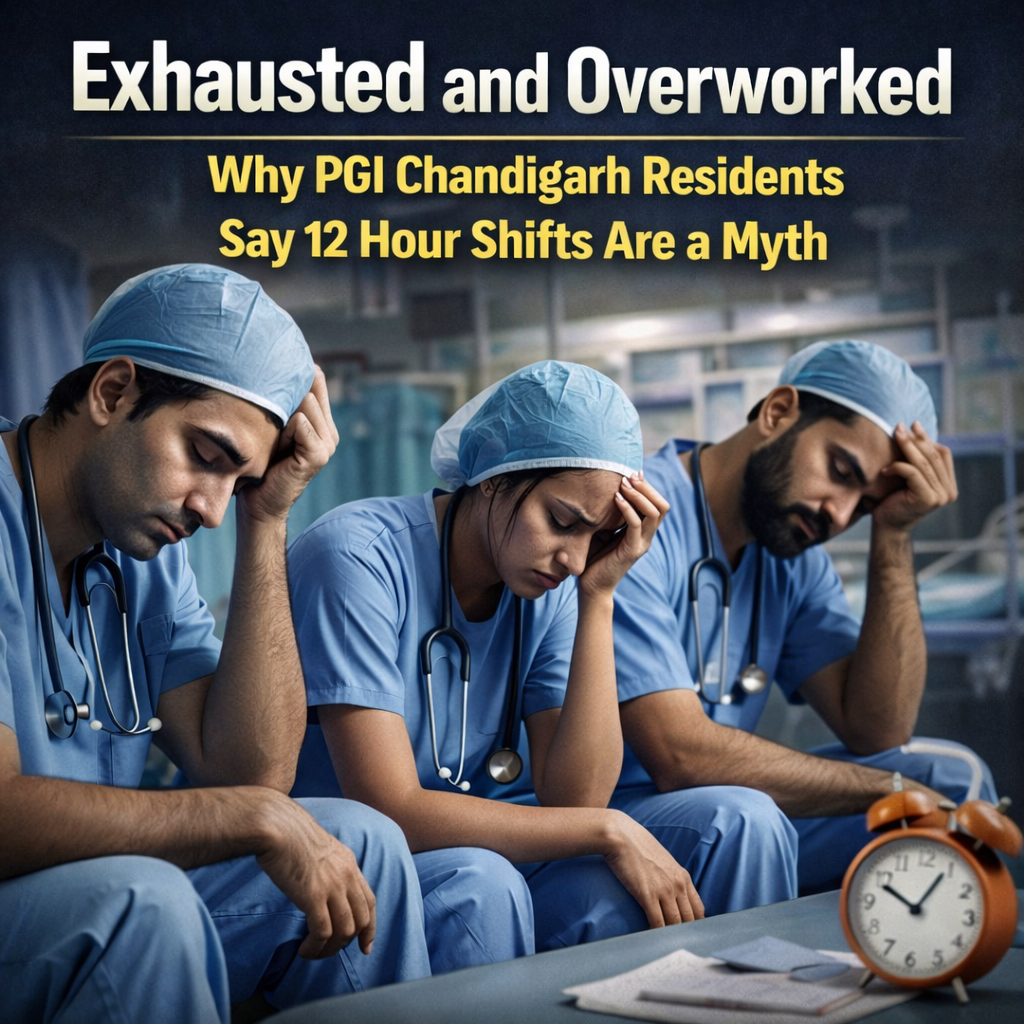
A fresh report from April 13, 2026 has spotlighted a growing crisis at the prestigious Postgraduate Institute of Medical Education and Research (PGIMER) in Chandigarh. Resident doctors there say the official 12 hour duty norms meant to prevent exhaustion are “only on paper.” Instead, they’re facing marathon shifts, weeks without a single day off and a burnout epidemic that’s raising red flags for both doctor well being and patient safety.14
If you’re a medical student, practicing doctor, healthcare administrator or simply someone who cares about India’s medical system
What the Rules Actually Say and Why They’re Not Working
Back in 1992, the Ministry of Health and Family Welfare introduced the Residency Scheme after a Supreme Court directive. It clearly states:
- Maximum 12 hours per day
- No more than 48 hours per week
- At least one weekly off
These guidelines were created to give young doctors time to rest, study and recharge essential when lives are literally in their hands.At PGI Chandigarh, a circular issued in September 2025 by Director Dr. Vivek Lal reinforced this. Department heads were told to optimize schedules and ensure weekly offs so residents wouldn’t face “undue mental or physical stress.”
Fast forward to 2026: Residents in wards and emergency departments report the opposite. Heavy patient inflows, chronic staff shortages and the ethical pressure of never leaving a patient unattended mean shifts regularly stretch beyond 12 hours. Some have reportedly gone up to 30 days straightwithout a break (a complaint that first surfaced in January 2026 and persists today).
One anonymous resident summed it up perfectly: the 12 hour limit is ignored the moment workload spikes because “patients cannot be left unattended.”
The Human Cost: Burnout, Sleep Deprivation and More
Long hours aren’t just tiring they’re dangerous.
Resident doctors describe:
- Constant sleep deprivation that clouds judgment and focus
- Skipped meals and no time for basic self-care
- Rising mental health strain, anxiety, and emotional exhaustion
- Struggles balancing family life, finances, and the constant threat of violence from stressed patient attendants
The institute trains over 1,200 residents (junior and senior combined) every year. Most complete their programs, but many do so while battling intense physical and psychological pressure.
This isn’t unique to PGI. Similar stories echo across AIIMS, state medical colleges and private hospitals nationwide. United Doctors Front (UDF) has called it outright “exploitation,” demanding more than just policy documents real staffing increases, fair workload distribution and enforced rest periods.
Why This Matters for Patients Too
When doctors are overworked:
- Risk of clinical errors rises
- Quality of care can dip during long shifts
- Empathy fatigue sets in affecting doctor patient relationships
A recent Parliamentary Standing Committee on Health and Family Welfare report (submitted March 18, 2026) nailed it. Chaired by MP Prof. Ram Gopal Yadav, the committee highlighted massive faculty and resident vacancies in central institutes. It warned of burnout leading to compromised patient safety and strongly recommended a “Clinical Duty Hours Regulation” policy think aviation style rules with strict monitoring, mandatory rest and audited rosters.
UDF Chairperson Dr. Lakshya Mittal has already written to Union Health Minister Shri J.P. Nadda urging immediate rollout of these “pilot like” duty hour reforms.
The Bigger Picture: India’s Doctor Shortage Crisis
India has one of the world’s largest medical education systems, yet the doctor patient ratio remains far from ideal (roughly 1:800 in many regions, against the WHO ideal of 1:1,000). Tertiary care centers like PGI Chandigarh see patients from across North India, overwhelming the system.
Discussions are now underway at PGI to increase MD and DM seats to bring in more hands but experts say that’s only part of the solution. We also need:
- Faster faculty recruitment
- Better technology (electronic records, AI triage tools)
- Mental health support programs specifically for residents
- Stronger enforcement mechanisms so circulars don’t gather dust
What Can Be Done Right Now?
Here are practical steps that could make a difference:
- Strict Roster Audits — Independent monitoring of duty hours with public reporting.
- Hiring Drives — Fast-track recruitment for both residents and support staff.
- Shift Handover Protocols — Ensure seamless transitions so no doctor feels “stuck” with extra hours.
- Wellness Initiatives — On-campus counseling, gym access, and guaranteed off-days.
- National Policy Push — Turn the parliamentary recommendations into enforceable law across all medical institutes.
PGI administration is reportedly aware and may escalate the issue to the Union Health Ministry. That’s a promising start.
Final Thoughts: Doctors Deserve Better
Resident doctors aren’t asking for luxury they’re asking for the basic dignity of rest. When the next generation of India’s healers is running on fumes, the entire healthcare system suffers.
This April 2026 exposé from PGI Chandigarh isn’t just another news story. It’s a wake up call. If you’re a doctor reading this: You’re not alone. Your concerns are valid and increasingly visible. If you’re a policymaker or administrator: The 1992 rules were written for a reason. Enforce them and if you’re a patient or concerned citizen: The next time you visit a government hospital, remember the young doctor treating you might have been on duty for 18 hours straight. A little empathy goes a long way.
What’s your take? Have you or someone you know faced similar issues in medical training? Share in the comments below we’d love to hear your stories and ideas for reform.
Stay informed. Stay healthy. Support the doctors who support us.