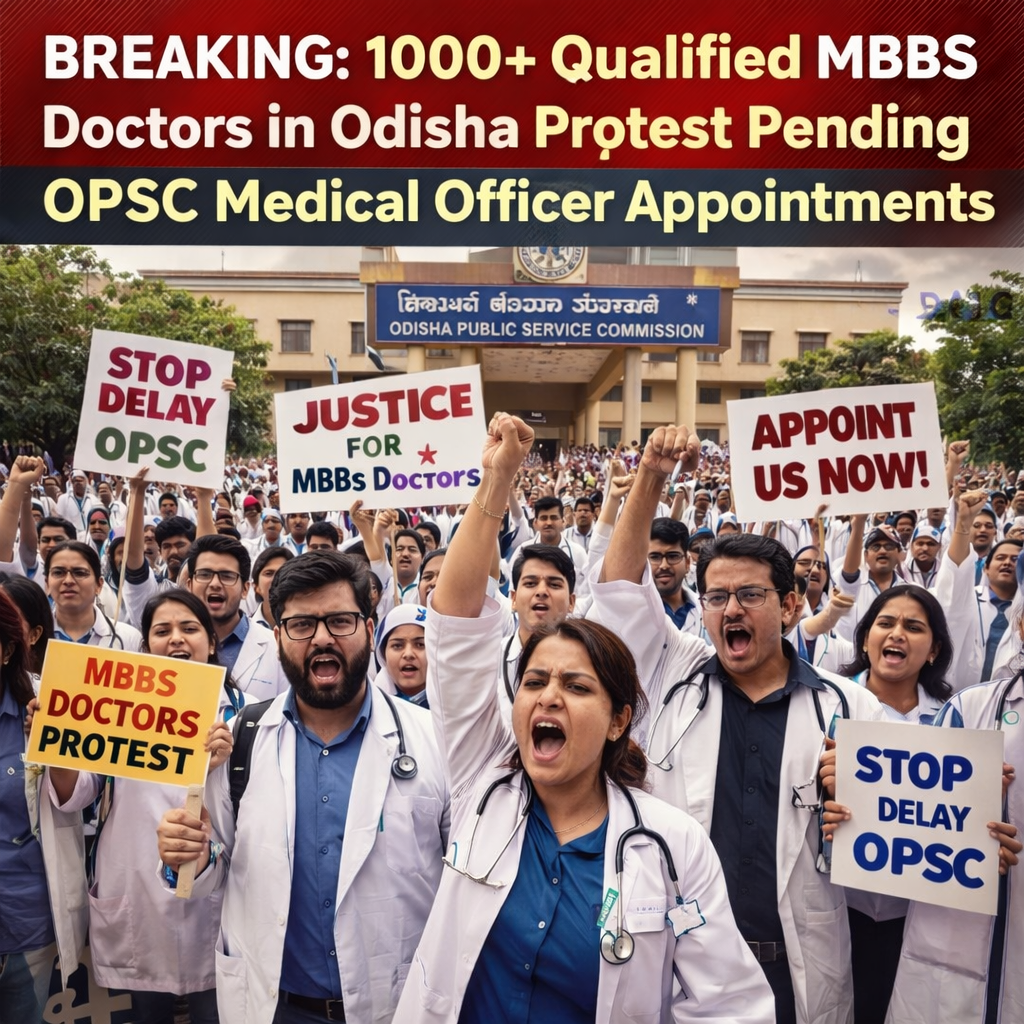
This isn’t just another protest story. It’s a glaring symptom of deeper issues in India’s medical recruitment system. With over 1,000 qualified doctors still waiting for postings despite clearing a massive recruitment drive for 5,284 positions announced last year, the frustration is real and the consequences could ripple far beyond Odisha.
What Exactly Happened?
On April 7, 2026 MBBS graduates who had successfully navigated the OPSC selection process took to the streets. They held placards, raised slogans, and sat in dharna, urging the authorities to issue appointment orders without further delay. Many had cleared every stage of the recruitment written exams, interviews and document verification months ago. Yet only a fraction (around 822, according to reports) have received their official postings.
The doctors allege that the lack of clarity from OPSC has left them in professional limbo. Some have completed internships, others are ready to serve in rural health centers, but without official orders, they can’t join duty. This delay isn’t just paperwork it’s derailing careers, financial stability and the state’s plan to strengthen its public health infrastructure.
Understanding the OPSC Medical Officer Recruitment Process
To appreciate the scale of this issue, let’s break down how these recruitments usually work in Odisha:
- Application Call: OPSC advertises thousands of posts (in this case, 5,284 in May 2025).
- Selection Stages: Candidates face a competitive written exam followed by document verification and sometimes interviews.
- Merit List & Appointment: Successful candidates receive appointment letters and are posted to government hospitals, primary health centers (PHCs), or community health centers (CHCs), often in underserved areas.
This process is designed to ensure merit based hiring and fill critical vacancies. But when the final step issuing appointment letters gets stuck, the entire system grinds to a halt. Qualified doctors end up waiting indefinitely, while hospitals continue to operate understaffed.
Why Do These Delays Happen? Common Reasons Behind Recruitment Bottlenecks
Recruitment delays in government medical jobs aren’t new but they seem to be getting worse. Here are some recurring factors (based on patterns seen across states):
- Administrative Backlogs: Verifying large volumes of documents for thousands of candidates takes time.
- Policy or Legal Hurdles: Sometimes court cases, reservation policy reviews, or budget approvals slow things down.
- Coordination Gaps: Between OPSC, the Health Department, and the state government.
- High Volume of Applicants: With India’s growing number of MBBS seats, competition is fierce, and processing takes longer.
Whatever the exact reason in this case, the result is the same: talented young doctors feel undervalued, and patients in rural Odisha pay the price through longer wait times and overburdened doctors.
The Real Impact: On Doctors, Families and Healthcare Access
Imagine investing 5–6 years (plus internship) in medical education, only to sit idle because your appointment letter is delayed. For many of these protesters:
- Financial Stress: Loans from medical college days are due, yet no salary is coming in.
- Career Uncertainty: Some may consider migrating to private hospitals, other states, or even abroad leading to brain drain.
- Mental Health Strain: Prolonged waiting creates anxiety and demotivation among bright young professionals.
On the healthcare side, Odisha like many states already faces a shortage of doctors in rural and tribal areas. Timely appointments of these 5,000+ medical officers were meant to bridge that gap. Delays mean:
- Understaffed PHCs and CHCs
- Increased workload on existing government doctors
- Slower progress toward national health goals (like Ayushman Bharat coverage)
This isn’t just an Odisha story. Similar recruitment delays have been reported in other states, highlighting a national challenge in absorbing the rising number of MBBS graduates into the public system.
Broader Lessons for Aspiring Doctors and Policymakers
If you’re an MBBS student or recent graduate reading this here’s practical advice:
- Stay Updated: Regularly check OPSC (or your state’s PSC) websites and official notifications.
- Build Backup Plans: Gain experience through locum work, research, or skill upgrades while waiting.
- Network: Join doctor associations and forums to stay informed about policy changes.
For policymakers, this protest is a wake up call. Possible solutions include:
- Setting strict timelines for each stage of recruitment (e.g., appointments within 3 months of merit list publication).
- Digitizing document verification to reduce delays.
- Increasing transparency with regular status updates on the OPSC portal.
- Creating a fast track mechanism for urgent health postings.
The Odisha government has previously shown willingness to address doctor demands (as seen in earlier negotiations with medical associations). A swift resolution here could prevent escalation and restore faith in the system.
Why This Matters for India’s Healthcare Future
India produces thousands of new doctors every year, yet rural healthcare remains patchy. Timely recruitment isn’t a luxury it’s essential for:
- Reducing doctor-patient ratios in underserved districts
- Strengthening emergency and primary care
- Retaining talent within the public sector instead of losing it to private practice or overseas opportunities
Events like the Cuttack dharna remind us that behind every “pending file” is a real person ready to serve. Ignoring these voices risks demotivating an entire generation of healers.
Final Thoughts: Hope for a Quick Resolution
The protesting doctors in Odisha have shown remarkable restraint by keeping their demonstration peaceful. Their demand is simple and justified: release the appointment letters and let them start serving the people who need them most.
As of now (April 10, 2026) ball is in the government’s court. A prompt response could turn this moment of frustration into an opportunity to streamline future recruitments.
What do you think? Should state governments face stricter accountability for recruitment timelines? Share your views in the comments below especially if you’re a doctor, medical student, or someone who’s faced similar delays.
Related Reads:
- How to Prepare for PSC Medical Officer Exams in 2026
- Doctor Shortage in Rural India: Facts, Figures & Fixes
- Career Options After MBBS: Public vs Private Sector
This is an original analysis based on recent public reports. All facts are drawn from verified news coverage of the April 2026 events.