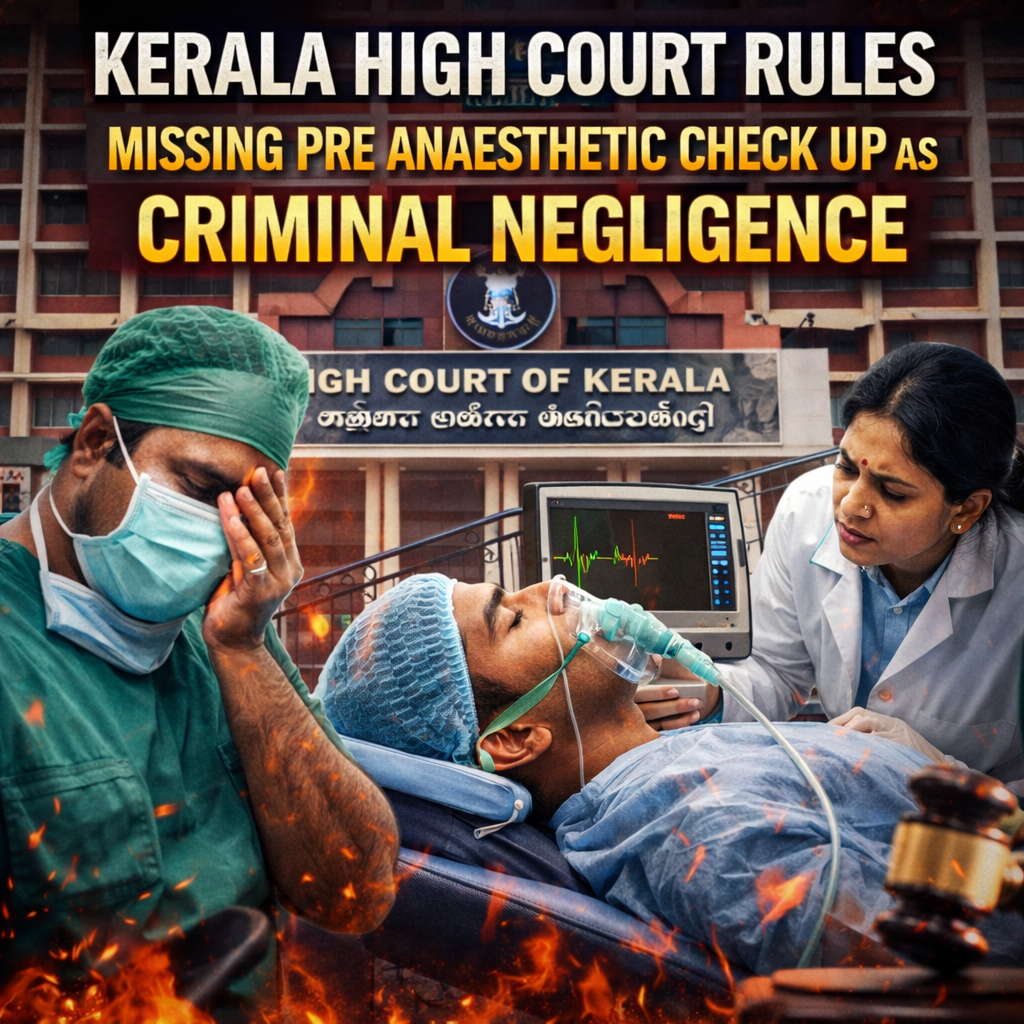
This ruling, delivered in April 2026 by Justice G. Girish, serves as a strong reminder: basic protocols are not optional they are the difference between safe practice and criminal liability. Whether you’re an anaesthetist, surgeon, hospital administrator or medical student, this case highlights why pre anaesthetic evaluation must never be skipped.
What Exactly Happened in This Case?
The incident dates back to a post-partum sterilisation (PPS) procedure performed on a 23 year old woman just two days after she delivered a baby. The patient unfortunately passed away due to complications later identified as peripartum cardiomyopathy.
The prosecution alleged that the anaesthetist proceeded with anaesthesia without conducting the mandatory pre anaesthetic check up. An expert panel of senior doctors reviewed the hospital records and postmortem report and concluded that the absence of this evaluation contributed to the tragic outcome. The anaesthetist challenged the framing of charges under IPC 304A, claiming records showed the check-up was done.
The Kerala High Court examined the matter and held that if no pre anaesthetic check up was performed, it prima facie amounts to gross negligence. The court declined to discharge the case or grant relief, observing that such an omission deprives the medical team of the chance to detect hidden risks and take life saving precautions. The dispute over whether the check up was actually documented will now be decided during the trial.
Understanding Pre Anaesthetic Check Up: The Non Negotiable First Step
A pre anaesthetic check up (also called pre-operative anaesthetic assessment or PAC) is a systematic evaluation done before any surgery involving anaesthesia. It is not a formality it is a critical safety net.
What does it typically include?
- Detailed medical history (allergies, previous surgeries, chronic illnesses, family history of anaesthetic complications)
- Physical examination (airway assessment, heart and lung evaluation, BMI, vital signs)
- Relevant investigations (blood tests, ECG, chest X-ray, echocardiography if indicated)
- Risk stratification using tools like ASA Physical Status Classification
- Discussion of anaesthetic plan and obtaining informed consent
Guidelines from the Indian Society of Anaesthesiologists (ISA) and international standards (like those from the American Society of Anesthesiologists) make it mandatory for every elective and emergency case.
Why Skipping This Step is Considered Gross Negligence
The Kerala High Court’s observation is rooted in basic medical logic: undetected comorbidities can turn a routine procedure deadly. In this case, peripartum cardiomyopathy condition that weakens the heart muscle around childbirth might have been identifiable through proper history and basic cardiac evaluation.
When a doctor skips this step:
- Hidden risks (hypertension, undiagnosed heart disease, airway issues, drug interactions) remain invisible.
- No opportunity arises to optimise the patient, postpone surgery, or choose a safer anaesthetic technique.
- The patient is exposed to preventable harm.
Indian courts have repeatedly held that gross negligenceis not mere error of judgment. It is a reckless departure from accepted standards that a reasonable doctor would follow. This ruling reinforces that standard protocols, especially in anaesthesia, are not suggestions they are the legal benchmark.
BNS 106 and Medical Negligence in India: The Current Reality
Section 106 BNS punishes causing death by a rash or negligent act not amounting to culpable homicide. For doctors, this section is frequently invoked in medico legal cases.
Over the last decade, complaints against doctors have risen sharply. While most cases involve civil liability under the Consumer Protection Act, criminal cases under section 106 BNS carry the risk of imprisonment and professional stigma.
Key principles from Supreme Court and High Court judgments:
- Simple negligence = civil liability (compensation)
- Gross/rash negligence = criminal liability (possible jail time)
- Honest errors of clinical judgment are protected
- Failure to follow basic, well-established protocols is not protected
This Kerala High Court ruling adds to the growing body of case law that expects doctors to document every step meticulously.
Practical Takeaways for Doctors and Hospitals
- Never skip pre anaesthetic evaluation– Even in emergency cases, a rapid assessment must be done and documented.
- Document everything– Maintain clear, timestamped records of history, examination, investigations, risk assessment and consent.
- Follow standard guidelines– Use ISA or hospital specific PAC protocols.
- Team communication– Surgeons, anaesthetists, and nurses must coordinate before wheeling the patient in.
- High risk patients– Pregnant, elderly, obese or cardiac patients require extra caution and specialist input.
- Invest in training– Regular workshops on medico legal awareness and documentation can prevent costly mistakes.
Hospitals should implement electronic health record systems that make skipping PAC practically impossible.
For Patients: What You Should Know and Ask
If you or a loved one is scheduled for surgery:
- Ask your anaesthetist if a pre anaesthetic check up has been done.
- Share your complete medical history honestly.
- Don’t hesitate to ask about risks and the anaesthetic plan.
A well informed patient is a safer patient.
Final Thoughts: Patient Safety First, Always
The Kerala High Court’s April 2026 ruling is not anti doctor. It is pro patient and pro safe practice. It reminds every medical professional that cutting corners on basic safety protocols can have serious legal consequences. In an era of increasing patient awareness and medico legal scrutiny, the message is loud and clear: follow protocols, document thoroughly, and put patient safety above everything else. Doing so not only protects patients but also shields doctors from avoidable legal battles.
Anaesthetists and surgeons let this case be a wake up call to double check your processes today. The few extra minutes spent on a proper pre anaesthetic evaluation could save a life… and your career.
Have you ever faced challenges in getting a complete pre anaesthetic evaluation done? Share your experiences in the comments below. Let’s discuss how we can strengthen patient safety together.
Disclaimer: This article is for informational and educational purposes only and does not constitute legal or medical advice. Always consult your hospital’s legal team or senior colleagues for case-specific guidance.