The Rajasthan High Court has strongly criticised illegible handwritten post-mortem and medico-legal reports and ordered mandatory use of MedLEaPR software from February 2026. The judgment holds doctors and police accountable and marks a major reform in forensic and medico-legal documentation in India.
A Routine Bail Hearing That Exposed a Serious Systemic Failure
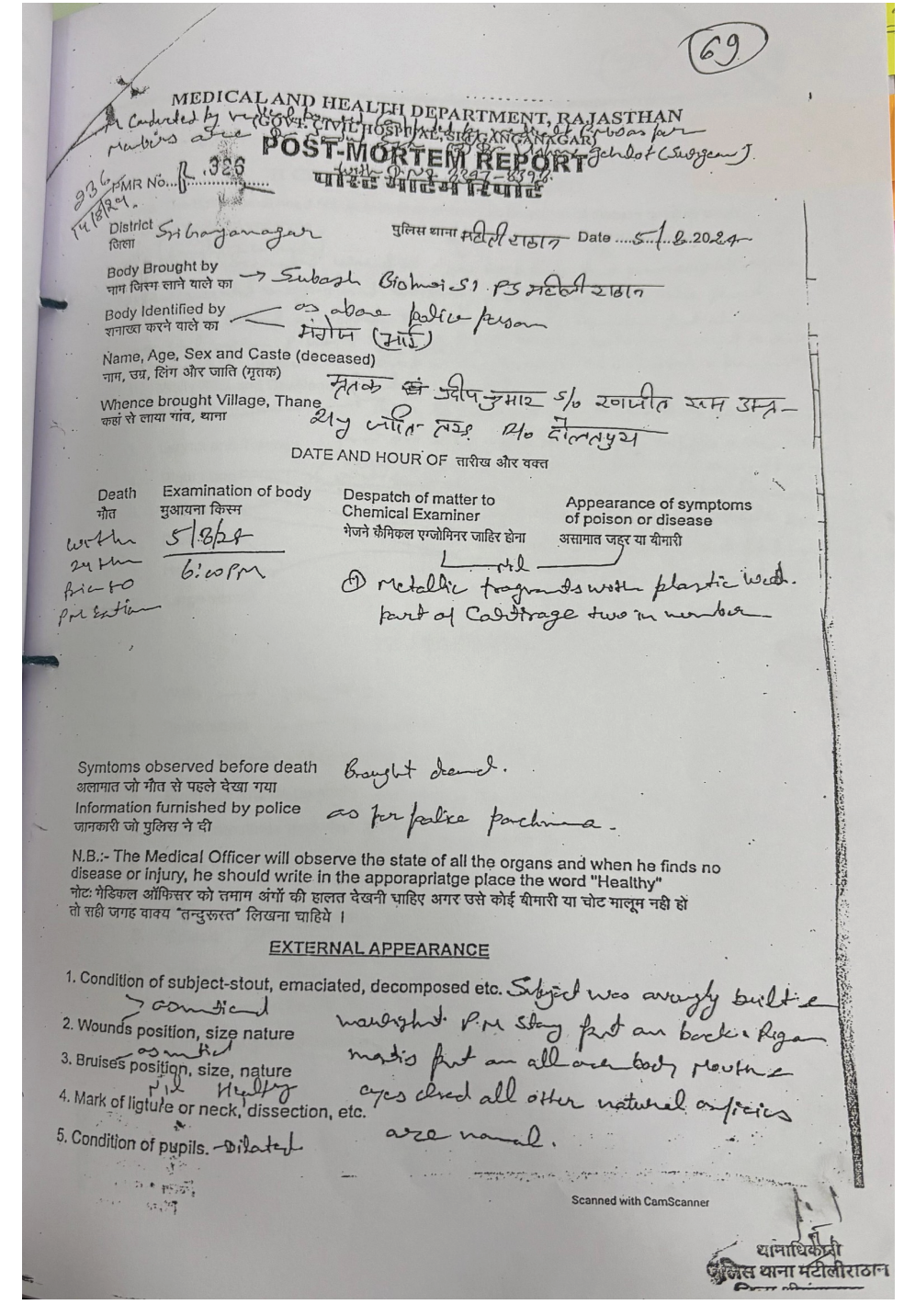
In a bail application before the Rajasthan High Court at Jodhpur, the Court was compelled to examine a post-mortem report prepared in a murder case. While considering the bail plea, the Court found itself unable to properly read or understand the post-mortem report because it was handwritten, poorly structured and largely illegible. The Court observed that such documents are not meant for the personal use of doctors, but are vital legal records that directly affect criminal trials, liberty of accused persons and the delivery of justice.
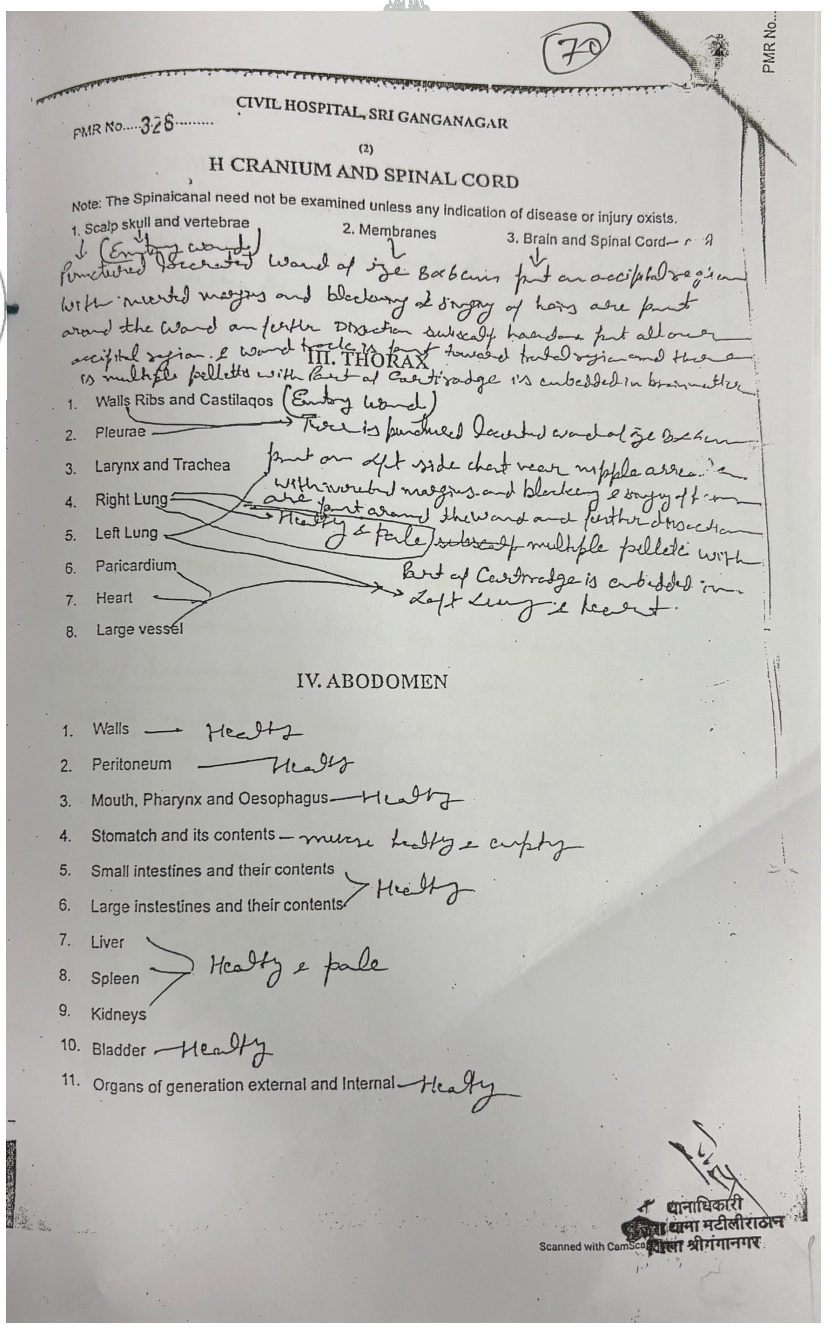
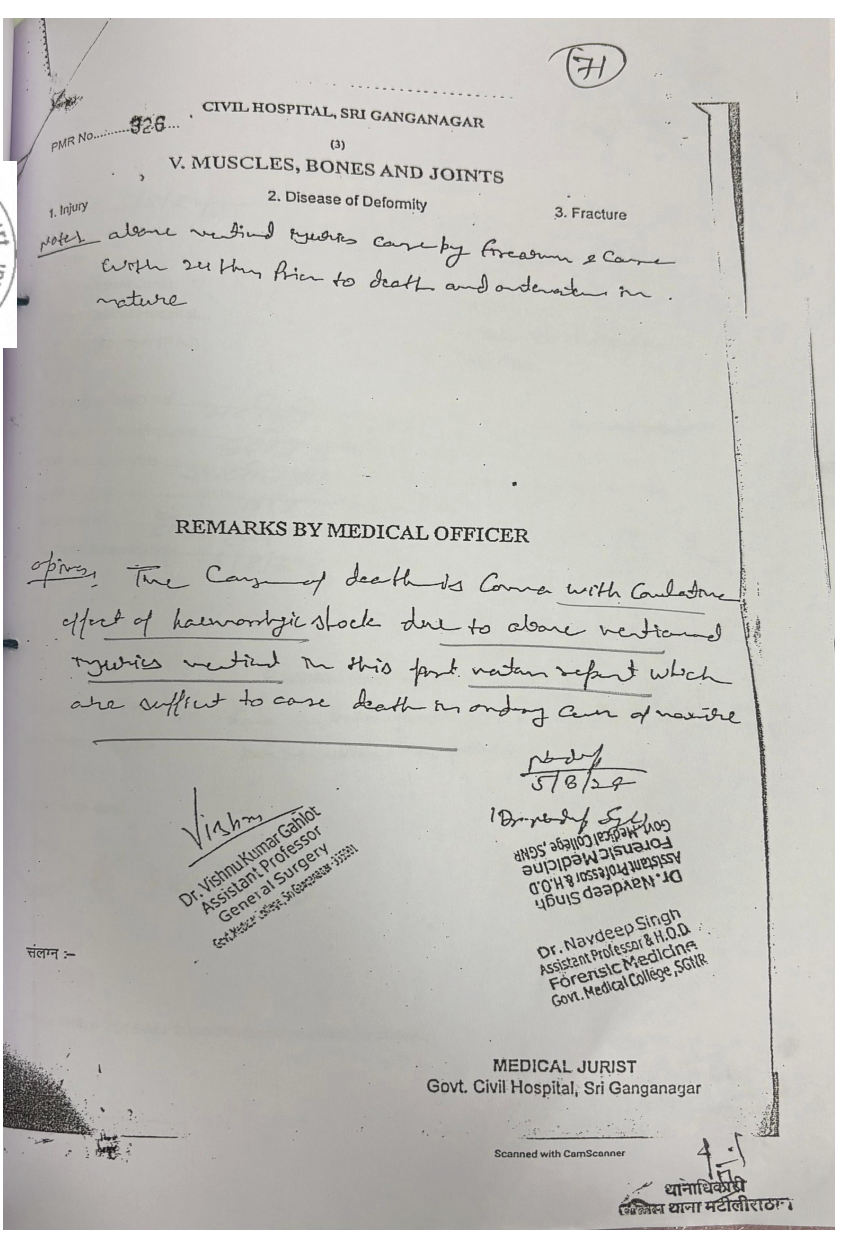
This is the illegible postmortem report:
The Court’s Strong Words on the Quality of Medico-Legal Reports
The High Court described the condition of the post-mortem report as “pathetic” and remarked that it appeared to have been prepared only for the doctor’s own understanding. The Court emphasised that post-mortem reports, injury reports and other medico-legal documents are crucial not only for the prosecution and defence, but also for courts, investigating agencies and administrative authorities. If these documents are unreadable, the entire criminal justice system is weakened at its foundation.
Why Illegible Medical Documents Are Not a Minor Defect
The judgment makes it clear that illegible medico-legal reports are not a small or technical problem. Such documents delay trials, create confusion in courts, increase the risk of wrongful conclusions and may even result in miscarriage of justice. The Court noted that if a judicial officer cannot understand what is written in a post-mortem report, then the very purpose of preparing that report is defeated.
The Irony of the Digital Age and Pen-and-Paper Forensics
The Court expressed serious concern that despite the country having a robust digital infrastructure, medico-legal reports are still being prepared by hand in many parts of Rajasthan. This, according to the Court, reflects a casual and negligent approach towards a responsibility that has serious legal consequences.
MedLEaPR: A Proven Digital Solution Already Exists
The judgment traces the history of the Medico Legal Examination and Post-Mortem Reports System (MedLEaPR), which was developed by NIC Haryana following directions of the Punjab and Haryana High Court as early as 2011. This software allows doctors to prepare structured, typed, standardised and legally compliant medico-legal reports, including graphical marking of injuries, digital storage, audit trails and secure access.
Rajasthan’s Delayed and Half-Hearted Implementation
The Principal Secretary, Medical & Health informed the Court that Rajasthan had started using MedLEaPR from January 2025, but only in cases where police send online requests through CCTNS. In all other cases, doctors were still preparing reports by hand. The Court found this approach completely unacceptable because it leaves the choice of digital or manual reporting to investigating officers, thereby defeating the very purpose of having such a system.
The Legal Importance of Legible Medical Writing
The Court referred to National Medical Commission regulations and earlier judgments of various High Courts which clearly state that medical prescriptions and medico-legal documents must be legible, preferably in capital letters, and ideally typed. Courts have even recognised that the right to a legible medical document forms part of the right to life under Article 21 of the Constitution, because illegible documents can cause medical errors, legal errors and fatal consequences.
Time-Bound and Strict Directions by the Rajasthan High Court
The Rajasthan High Court issued detailed and binding directions to the State Government. It ordered that from 1 February 2026 onwards, all medico-legal reports including post-mortem reports, injury reports, age determination reports and sexual assault examination reports must be prepared only through the MedLEaPR software. Handwritten reports will not be accepted after this date.
Interim Safeguards: Capital Letters and Typed Copies
Till the digital system is fully implemented everywhere, the Court has directed that all reports must be written in clean, legible capital letters and must be accompanied by a typed copy. This applies not only to post-mortem and injury reports, but also to OPD slips, medical opinions and other important medical documents.
Fixing Responsibility: Doctors and Police Both Accountable
The Court made it absolutely clear that if any report is prepared by hand after the deadline, responsibility will not only lie on the doctor, but also on the investigating officer, SHO, Superintendent of Police and even Commissioners of the concerned districts. Violation can invite disciplinary action and even contempt of court proceedings.
Infrastructure, Training and Systemic Reform
The State Government has been directed to ensure that all PHCs, CHCs, SDHs and district hospitals are provided with computers, printers, scanners, UPS and high speed internet. All doctors and medical jurists must be registered and trained on the MedLEaPR platform. New formats with adequate space for proper documentation are also to be introduced.
Data Security and Privacy of Medico-Legal Records
The Court also addressed the sensitive nature of medico-legal data. It directed that access to digital records must be strictly controlled, no unauthorised sharing should take place, QR codes must be used to verify authenticity, and any data breach must attract strict action.
Why This Judgment Is a Turning Point for Forensic Practice
This judgment is not merely about handwriting or software. It is about restoring credibility, scientific rigour and legal reliability to medico-legal documentation in India. A poorly written post-mortem report can be as damaging to justice as a poorly conducted investigation.
What This Means for Medical Officers and Forensic Doctors
Medico-legal documentation is no longer a clerical formality. It is a legal act with serious consequences. Casual, careless or illegible reporting can now expose doctors to disciplinary action, court proceedings and professional embarrassment.
Legal Takeaway for Doctors
This judgment makes one thing absolutely clear: a medico-legal report is not just a medical document, it is a legal document. If your post-mortem report, injury report or medical opinion is unclear, illegible or poorly drafted, it can weaken the entire case, harm the administration of justice and put you personally at legal risk. From now on, failure to follow prescribed formats, digital systems and legibility standards can invite disciplinary action and even contempt of court. In the era of rising medical negligence litigation and judicial scrutiny, good documentation is no longer optional, it is professional self-protection.
Source: Based on the judgment of the Rajasthan High Court in Mukesh Kumar @ Mangej vs State of Rajasthan (2025), concerning illegible post-mortem and medico-legal reports.
Uttar Pradesh introduces a major medico legal reform allowing post mortems in government and approved private medical colleges under the leadership of Brajesh Pathak. The policy aims to reduce delays, improve forensic training, enhance transparency and strengthen justice delivery across Uttar Pradesh.
Dramatic rise in C-section deliveries in India, now over 27% in 2024-25 A fourfold increase in 16 years. This blog dives into government data, reasons like private sector incentives and patient preferences, health risks, and solutions for balanced maternity care.
Medico-legal landscape of euthanasia in India, focusing on passive euthanasia and advance directives (living wills). From landmark Supreme Court rulings like Aruna Shanbaug (2011) and Common Cause (2018 & 2023) to patient autonomy and ethical considerations in end-of-life care.