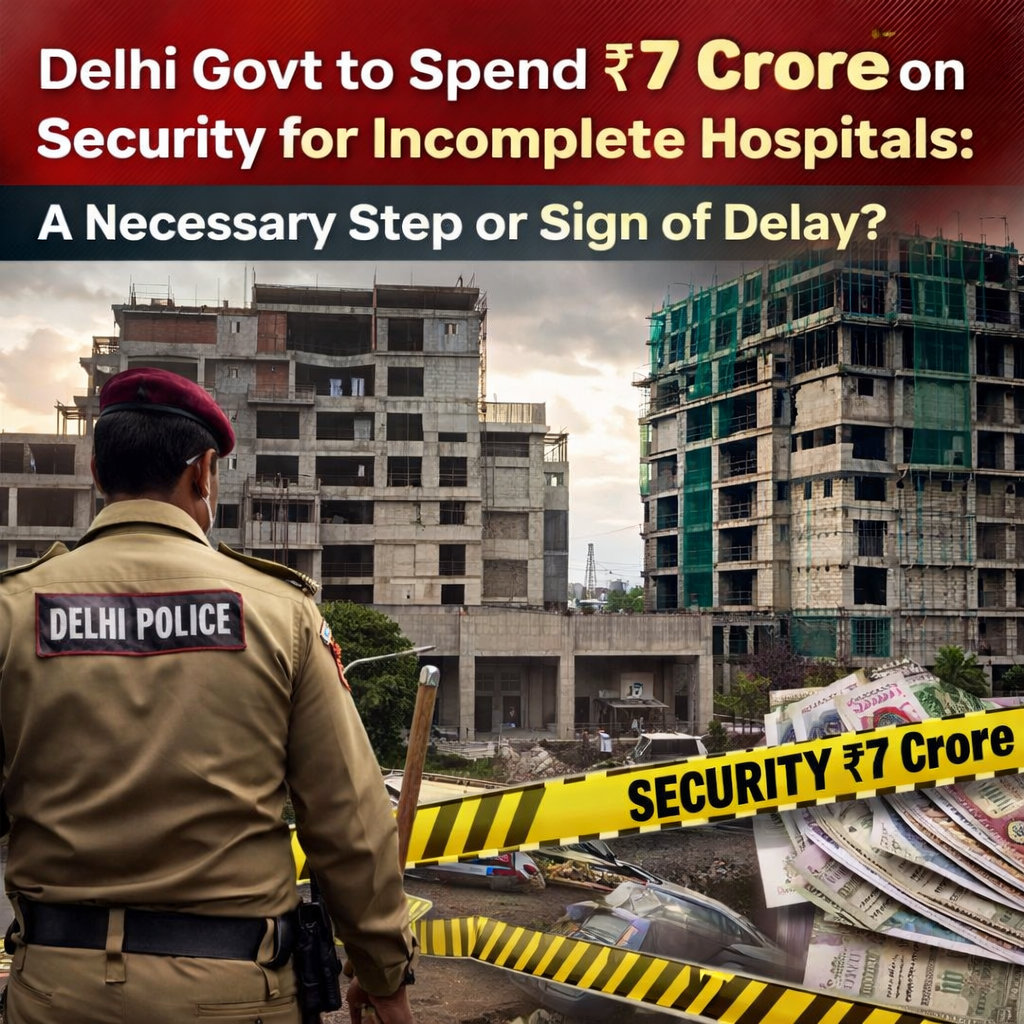
This decision aimed at protecting public assets from theft and vandalism, comes at a time when the capital is pushing hard to expand its healthcare infrastructure.
While the move underscores the government’s commitment to safeguarding taxpayer funded projects, it also raises important questions about project delays, infrastructure management and the urgent need for more hospital beds in Delhi. In this blog post, we take a detailed, balanced look at the announcement, its implications and what it reveals about the bigger picture of healthcare development in India’s national capital.
Breaking Down the ₹7 Crore Security Allocation
According to official statements, the funds will be used to secure three specific hospital sites that remain incomplete and non operational:
- Madipur Hospital – Approximately ₹2.43 crore
- Jwalapuri Hospital – Approximately ₹2.39 crore
- New block at Lok Nayak Jai Prakash Narayan (LNJP) Hospital – Approximately ₹2.22 crore
The one year security contract includes appointing specialized agencies to handle key protective measures such as:
- Installing sturdy barricades around the premises
- Improving lighting for better visibility
- Setting up advanced surveillance systems (CCTV and monitoring)
- Providing round the clock guarding to prevent encroachment or pilferage
This is not just about hiring watchmen it’s a comprehensive infrastructure upgrade designed to protect valuable construction materials, equipment, and partially built structures worth hundreds of crores.
Why Security Has Become a Priority for These Projects
Partially built hospitals are vulnerable targets. Construction materials like steel, cement, electrical fittings and medical equipment left on open sites often attract thieves and vandals. In many Indian cities, stalled infrastructure projects have suffered massive losses due to theft which ultimately increases the final project cost for taxpayers.
Delhi’s healthcare expansion has faced repeated delays due to factors like revised cost estimates, funding issues, land acquisition challenges, and technical hurdles. Some reports indicate that several of these projects have been stuck for nearly two years. In such situations, leaving sites unguarded can lead to irreversible damage something the government is clearly trying to avoid. By investing in security now, administration is essentially protecting the heavy investments already made so far. It’s a pragmatic step to ensure that when these hospitals finally become operational, they are not compromised by avoidable losses.
Delhi’s Healthcare Infrastructure: The Bigger Picture
Delhi has been actively working to bridge the gap between its growing population and available hospital beds. The city’s current bed to population ratio stands significantly below the World Health Organization (WHO) recommended standards. Major projects including large 1,000+ bed facilities and mid sized 500–700 bed hospitals have been in the pipeline for years.
Recent government budgets have allocated substantial amounts (over ₹13,000 crore for the health department in recent years) specifically for infrastructure upgrades, ICU facilities, and new hospitals. Additionally, the Delhi Government is exploring Public Private Partnership (PPP) models to fast track completion of 11 major hospital projects, where private agencies would handle both finishing construction and operations.
Despite these efforts, delays persist. Projects in areas like Madipur, Jwalapuri, Siraspur, Shalimar Bagh and others have seen structural work progress but remain stalled at final stages due to paperwork, redesigns, or funding approvals. This ₹7 crore security spend is a small but telling part of a much larger story of ambition versus execution in public healthcare.
Is This Spending Justified? A Balanced Perspective
The Case in Favor:
Protecting public property is essential. Every rupee spent on construction represents taxpayers’ money. Preventing theft and vandalism now could save several times that amount in future repairs or replacements. It also sends a strong message that the government is serious about completing these projects rather than letting them decay.
The Concerns Raised:
Critics may argue that spending ₹7 crore on security for buildings that should already be operational highlights deeper systemic issues delays, bureaucratic hurdles and poor project management. Why are hospitals still incomplete years after groundbreaking? Could better planning have avoided the need for such security spending altogether?
From a public health standpoint, every month of delay means thousands of patients in Delhi continue to face overcrowded government hospitals. The capital’s existing facilities are overburdened, and new beds cannot come soon enough, especially post-pandemic when healthcare resilience has become a national priority.
What Can Be Done to Avoid Such Situations in the Future?
This announcement can serve as a wake up call for more efficient project execution. Some practical steps forward could include:
- Stricter timelines and penalties in construction contracts
- Faster approval processes for revised estimates and technical clearances
- Greater use of PPP models to bring private sector efficiency
- Regular public audits and progress dashboards for major health projects
- Community oversight committees to monitor local hospital developments
Ultimately, the goal should be to convert these partially built structures into fully functional hospitals that provide quality care to residents of Madipur, Jwalapuri, LNJP and surrounding areas.
Final Thoughts: Protecting Today’s Investments for Tomorrow’s Health
The Delhi Government’s decision to allocate ₹7 crore for hospital security is a practical, forward thinking measure in the short term. It protects valuable public assets and demonstrates accountability. However, it also shines a light on the need for faster execution of healthcare projects across the city.
As Delhi continues its journey toward a more robust healthcare system, transparency, timely completion and smart resource allocation will be key. Citizens deserve not just promises of new hospitals, but actual, functional facilities that ease the pressure on existing ones.
What do you think? Is this ₹7 crore spend a necessary safeguard, or does it point to bigger problems in infrastructure delivery? Share your views in the comments below. If you found this analysis helpful, consider sharing it with friends and family who care about public health and governance in Delhi. For more updates on healthcare news, policy changes and infrastructure developments in India, bookmark this blog and stay tuned.
Note: This post is based on publicly available official statements and news reports as of April 10, 2026. All opinions expressed are analytical and aim to provide balanced context.